Adoption & Tool Consolidation
Gyms already using BTWB began moving onto Gym Management, and the ones that moved stayed. Many consolidated 3–5 external tools into a single platform, reducing operational overhead and simplifying their tech stack.
Case Study · Product Design · 0→1 Platform
A unified system that brings scheduling, billing, check-ins, and workout tracking together to streamline gym operations and elevate the member experience.
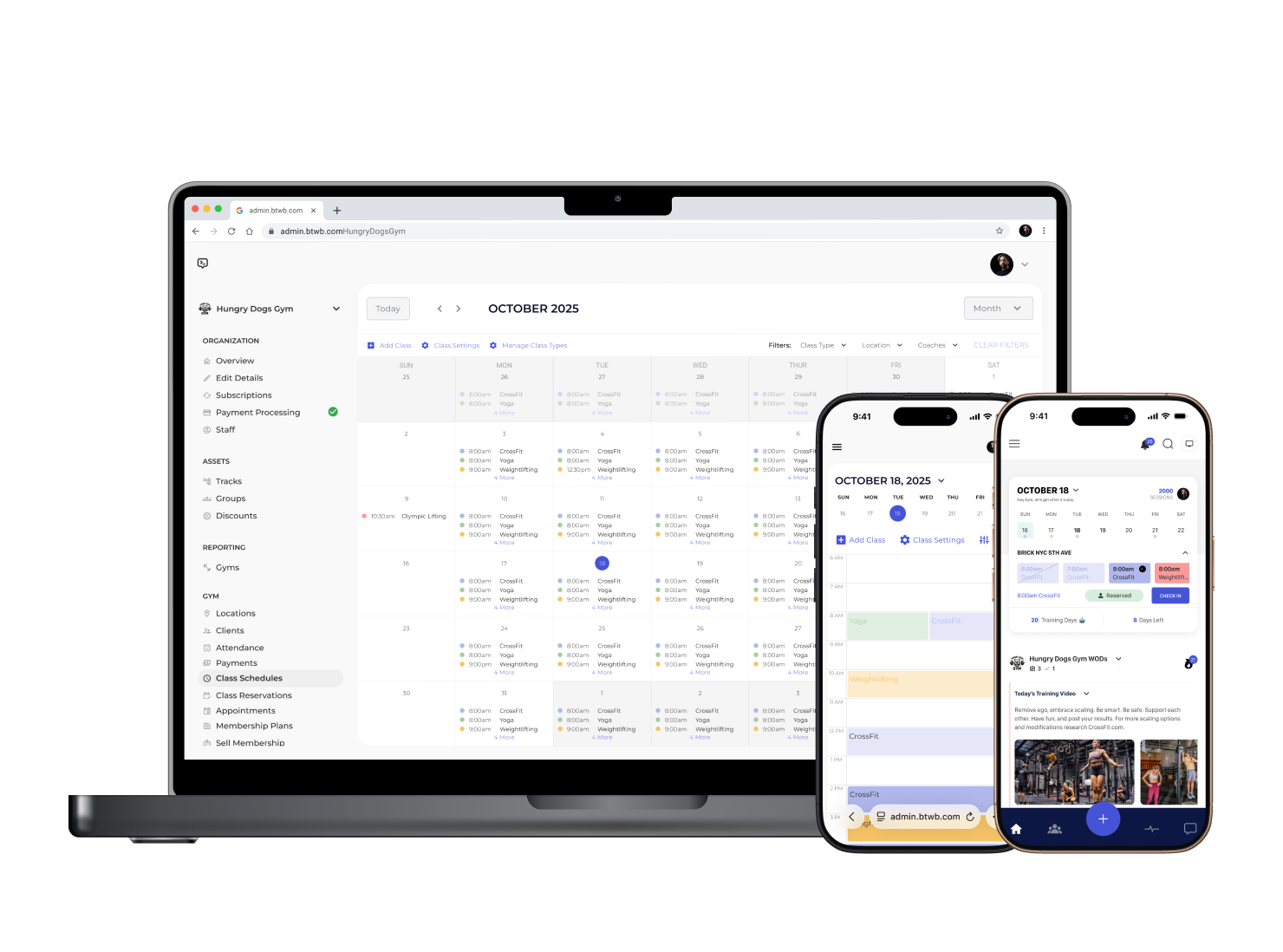
Hero view of the BTWB Gym Management platform across web and mobile.
Over a two-year 0→1 initiative, I led the end-to-end design of Beyond the Whiteboard’s Gym Management platform, transforming the product ecosystem from a workout-tracking app into a fully integrated operational system for functional fitness and CrossFit gyms.
BTWB had already been thinking beyond "just a workout tracker" when I joined—they saw an opportunity to become a full operational platform for functional fitness gyms. My prior experience designing the CrossFit Affiliate Portal in 2018–2019 gave me useful context for this problem space: I'd already spent time thinking about what gym owners need from their tools, from affiliate management to day-to-day operations. That background helped me hit the ground running and contribute meaningfully to BTWB's vision from day one.
Designed the UI, interactions, visuals, and UX strategy that enabled smooth, successful conversions for gyms switching from other management platforms to BTWB.
Built the core architecture on BTWB's existing design system, then extended it into a fully scalable SaaS platform.
Most gyms used BTWB for workout tracking but were forced to juggle 3–5 other tools for their daily operations — billing, check-ins, scheduling, POS, and client management. The fragmented experience created:
We identified an opportunity to consolidate all of this into one platform, built around the strengths and needs of functional fitness gyms.
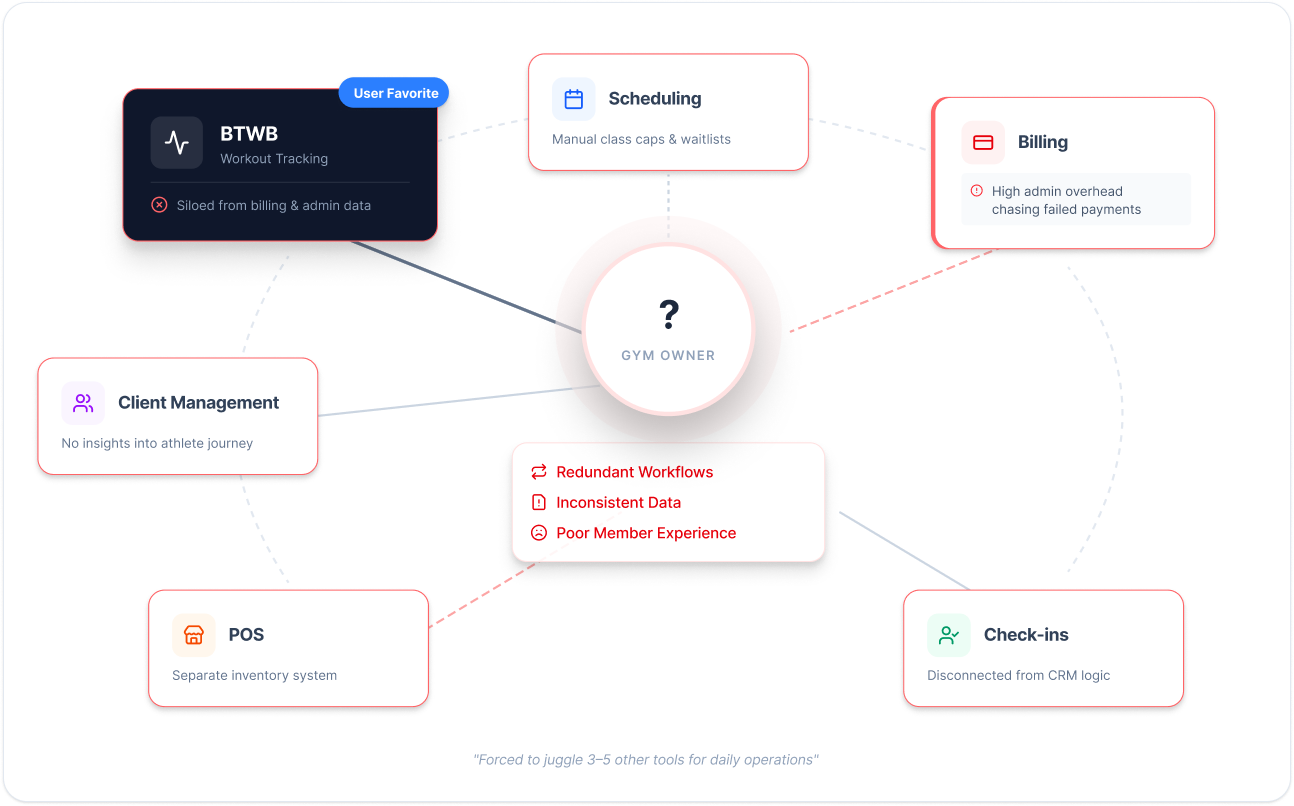
Before: a fragmented tool stack across billing, scheduling, check-ins, POS, and workout tracking.
While the project was not framed around proving strict business metrics, the shipped work clearly changed how gyms run on BTWB — from tool consolidation to member experience and coaching quality.
Gyms already using BTWB began moving onto Gym Management, and the ones that moved stayed. Many consolidated 3–5 external tools into a single platform, reducing operational overhead and simplifying their tech stack.
Members moved from juggling multiple logins to using a single app for workouts, class reservations, and check-ins. Progress, milestones, and badges live in one place, making the experience feel cohesive and more rewarding.
Coaches gained pre-class intel, integrated performance history, and balance-aware programming tools. Instead of piecing together information across systems, they could see readiness, risk, and opportunity from a single view.
Gym owners reported less admin work, fewer workflow gaps, and more confidence in their data. With attendance, retention, and performance visible in one place, they could spend more time coaching and less time troubleshooting software.
Feedback from the BTWB community was consistently strong, with high engagement on new features and adoption from gyms well beyond the US. Even without formal analytics, ongoing investment in the platform reflected its impact.
Gym Management turned BTWB from a workout tracker into the system a gym runs on: scheduling, memberships, billing, check-ins, and reporting in one place, on desktop and mobile, built around the class and the five people who touch it.
I led the design from the first owner interview through release, and the decisions I'd defend hardest are the ones that cost something at the time: mobile from day one, one visual language across products, and cutting onboarding to the bare minimum so an owner could see their gym before paying for it.