Tempus — A Connected, Real-Time Workout Experience
A unified workout experience built by a small team focused on clarity, connection,
and real-time performance — turning a brand-new training flow into a routine athletes
now rely on every day.
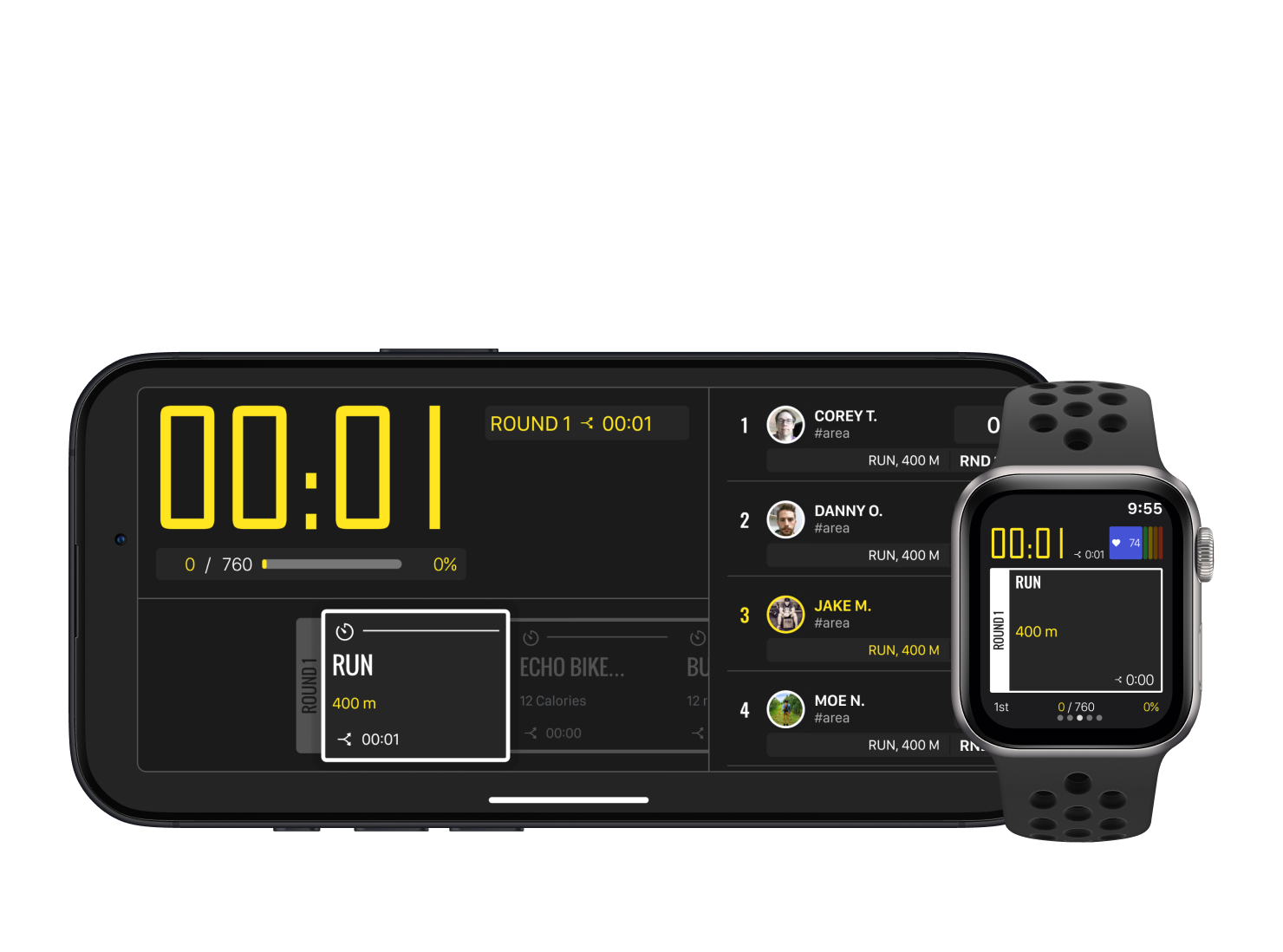
Tempus on mobile and Apple Watch — real-time timing, tracking, and pacing at a glance.
Overview
Tempus is BTWB’s
boldest step forward — an end-to-end workout timing and tracking experience built directly
into the core training workflow. Designed from the ground up, Tempus combines real-time
performance insights with a dynamic social layer that keeps athletes motivated and connected.
As lead designer on this 0→1 initiative, I shaped the product vision, defined the
multi-device experience, aligned stakeholders, and delivered a cohesive system now used
daily by the fitness community.
This case study highlights how we turned a brand-new behavior — training with live data
and shared leaderboards — into something athletes and gyms now treat as part of “how they
work out.”
Role & Impact
Lead Product Designer
Led the end-to-end design of a new, real-time training experience across phone, watch,
and in-gym displays — shaping a product that feels natural in the middle of hard workouts
and is now part of athletes’ daily routines.
Experience Type
Connected, Multi-Device
Mobile + WatchIn-Gym Displays
Unified timer, tracking, pacing, and live competition into a single, cohesive flow
that supports solo sessions, live classes, and remote workouts.
Training Shift
From Logging to Live
Before TempusAfter-the-fact logs
→
With TempusReal-time training
Problem & Opportunity
Before Tempus, BTWB was great at tracking what happened after training:
scores, PRs, and long-term progress. But the workout itself was supported by a patchwork
of tools — phone timers, wall clocks, whiteboards, and chat groups.
Athletes had no clear, real-time sense of pacing, splits, or how they were doing mid-workout.
Remote training felt disconnected, with no way to truly “be in class” together.
Coaches lacked live visibility into how their athletes were performing as the workout unfolded.
We saw an opportunity to bring timing, tracking, and social motivation together into a single,
connected experience — one that could work just as well in a noisy gym as it does at home.
Before
After
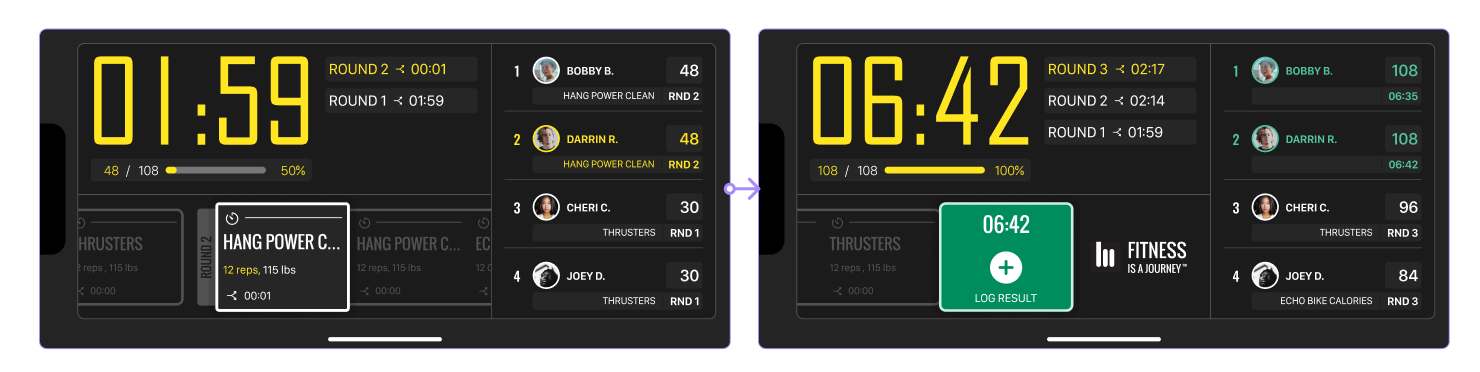
From after-the-fact logging to a live, real-time training experience.
Outcomes & Impact
While formal analytics weren’t available, usage patterns, community feedback, and
ongoing investment in the product made the impact clear.
Outcome 1
From New Feature to Daily Ritual
What began as a new way to train quickly became part of how many athletes structure
their workouts. Once set up, Tempus fades into the background — it’s there when you
need pacing, splits, or a race, and invisible when you don’t.
Outcome 2
Deeper Connection in Remote & In-Gym Training
Live leaderboards and shared views helped athletes feel like they were training
together, even when they weren’t in the same room. In class settings, coaches and
athletes could see progress unfold in real time.
Outcome 3
Clearer Feedback in the Moment
By surfacing pacing, splits, and performance in real time, athletes could make smarter
decisions during a workout, not just reflect afterward. Training sessions felt more
intentional and more engaging.
Outcome 4
Foundation for Future Experiences
Tempus laid the groundwork for richer insights and more connected training across
the BTWB ecosystem, turning real-time training data into something the product can
build on for years to come.
Conclusion
Tempus represents a major evolution for BTWB — shifting from a historical record of
training to a live, connected experience that shapes how athletes move, pace, and
compete in the moment.
As Lead Product Designer, I drove the vision, interaction design, and visual language
for this 0→1 product across multiple devices. The work demonstrates my ability to
design for complex, high-intensity contexts, align cross-functional teams, and ship
experiences that become part of users’ everyday routines.
From post-workout logging to real-time experience. That's the kind of shift I design for, and I'd love to do it again.